Cooling spend in a typical Indian manufacturing shed runs between 15% and 30% of the total electricity bill, and it spikes exactly when the tariff and the demand charge are at their worst.
The measures below are ordered by payback period. None of them involve accepting a hotter building.
1. Layer air movement over cooling instead of cooling harder
Perceived temperature is not air temperature. Moving air across skin at 1–2 m/s makes a space feel 5–8 °C cooler than a thermometer reads, because it accelerates evaporative heat loss from the body.
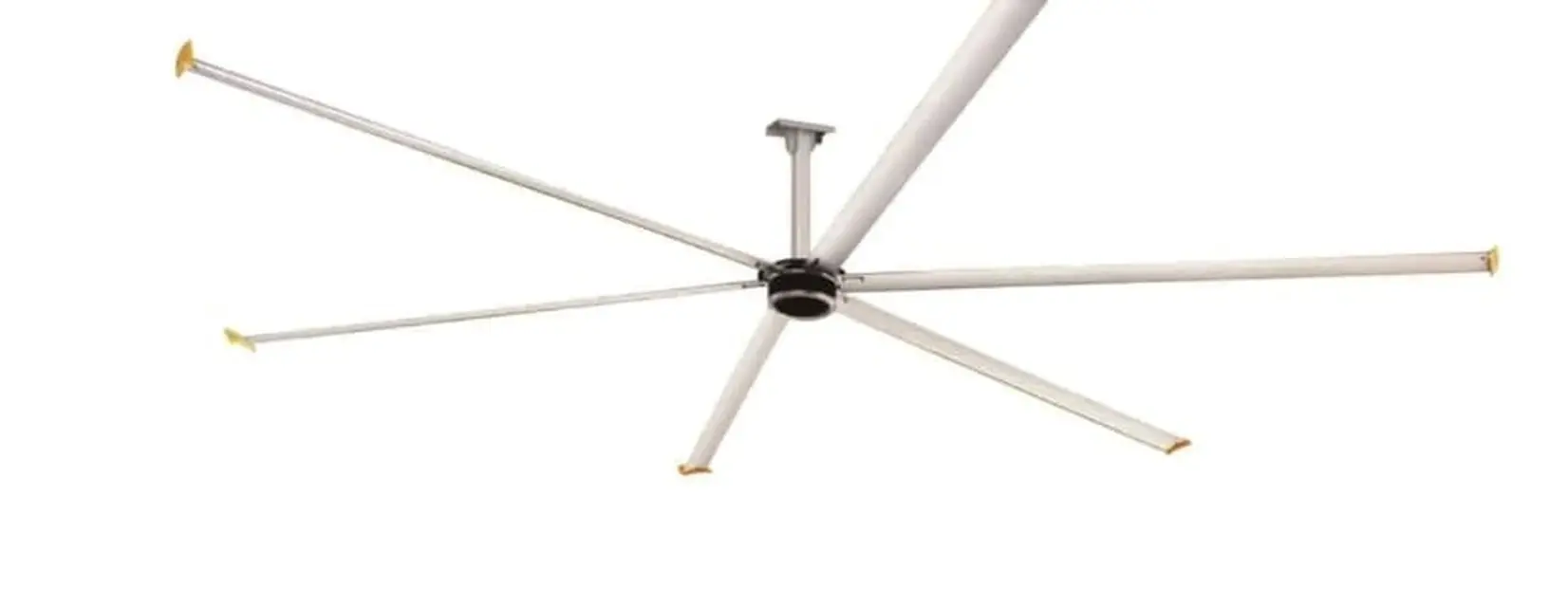
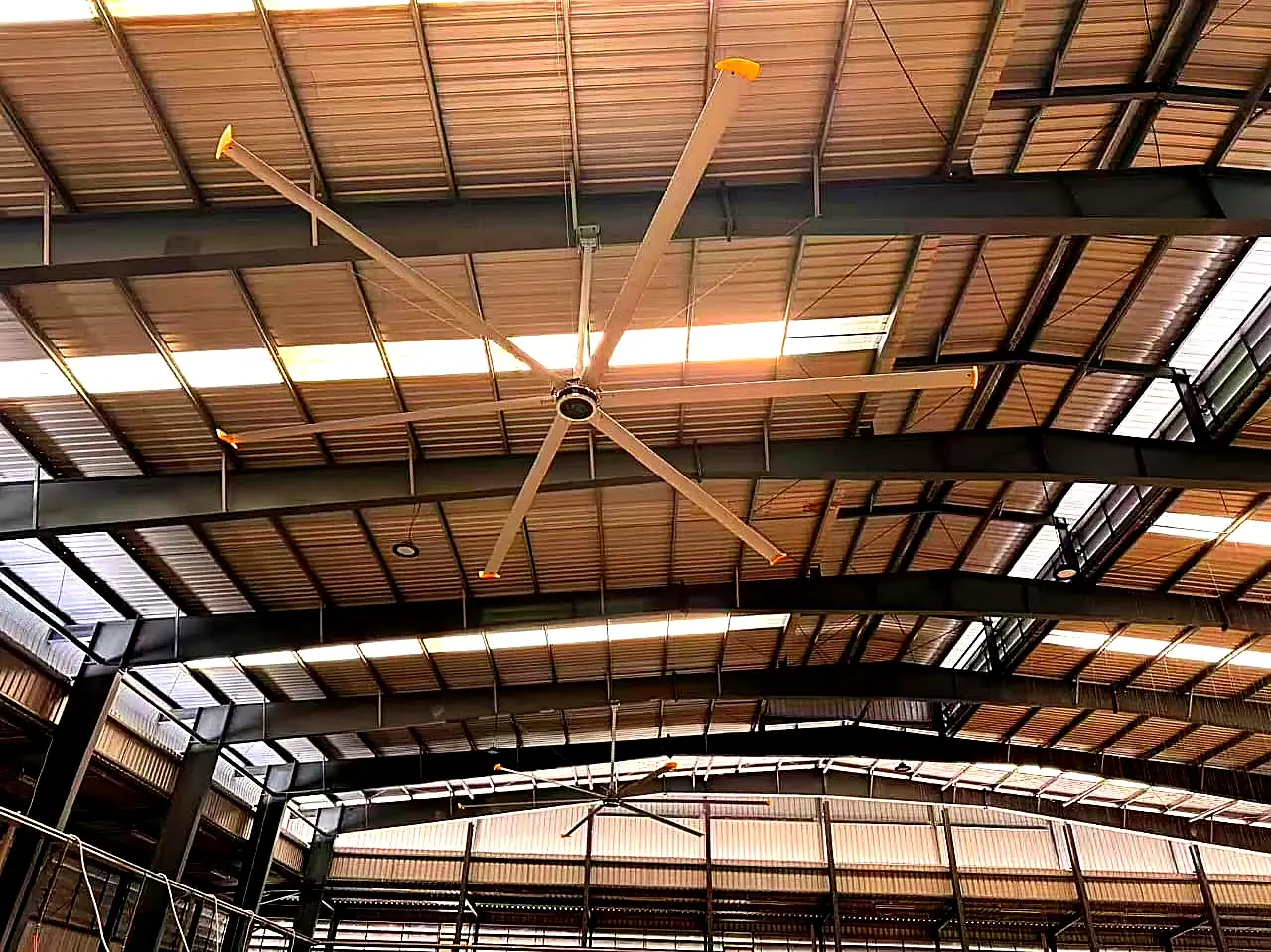
An HVLS fan drawing 1.5 kW and covering 1,200 m² buys you that 5–8 °C for a fraction of what the equivalent temperature drop would cost in refrigeration. In most sheds, adding air movement first and only then adding cooling capacity is the cheapest possible order of operations.
2. Replace banks of small fans with fewer large ones
Twenty 400 W wall and pedestal fans draw 8 kW and still leave dead zones between them. One 24 ft HVLS fan draws 1.5 kW and covers the same area uniformly. That is an 80%+ reduction on the air-movement line alone, and it usually improves comfort at the same time.
Payback on this swap in a continuously running shed is commonly under two years, before counting the maintenance saved on twenty separate motors.
3. Fix your pad maintenance schedule
- A scaled or partially blocked cooling pad can lose 20–30% of its evaporative efficiency while drawing exactly the same fan power.
- Flush the sump and check pad wetting at the start of every season, and mid-season in hard-water areas.
- Verify the distribution header is wetting the full pad width — dry stripes are the most common and most invisible efficiency loss.
- Clean or replace pads on a defined schedule rather than on failure. This is the cheapest item on this list and the most frequently skipped.
4. Destratify in winter, not just summer
In a 9 m tall shed, the air at roof level can sit 8–10 °C warmer than the floor. In winter, any heating you provide immediately rises and stays there.
Running HVLS fans at low speed in winter pushes that trapped warm air back down into the occupied zone. Buildings that heat their space commonly recover 10–20% of heating energy this way, at a fan cost of a few hundred watts.
5. Use night purge before the shift, not cooling during it
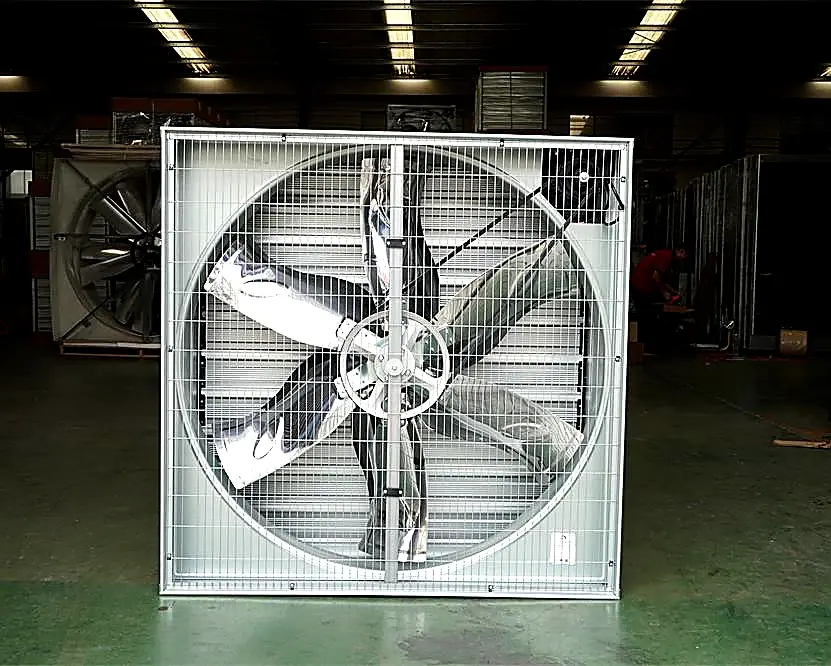
Between roughly 2 am and 6 am, outside air across most of inland India is 10–15 °C cooler than the afternoon peak. Running exhaust fans through that window flushes the accumulated heat out of the building mass.
A shed that starts the shift 5 °C cooler needs materially less cooling to hold comfort through the day, and it does the flushing on off-peak tariff.
6. Size for the zone, not the building
Most factories do not need the whole volume conditioned. Assembly lines, packing benches and QC stations are where people actually stand.
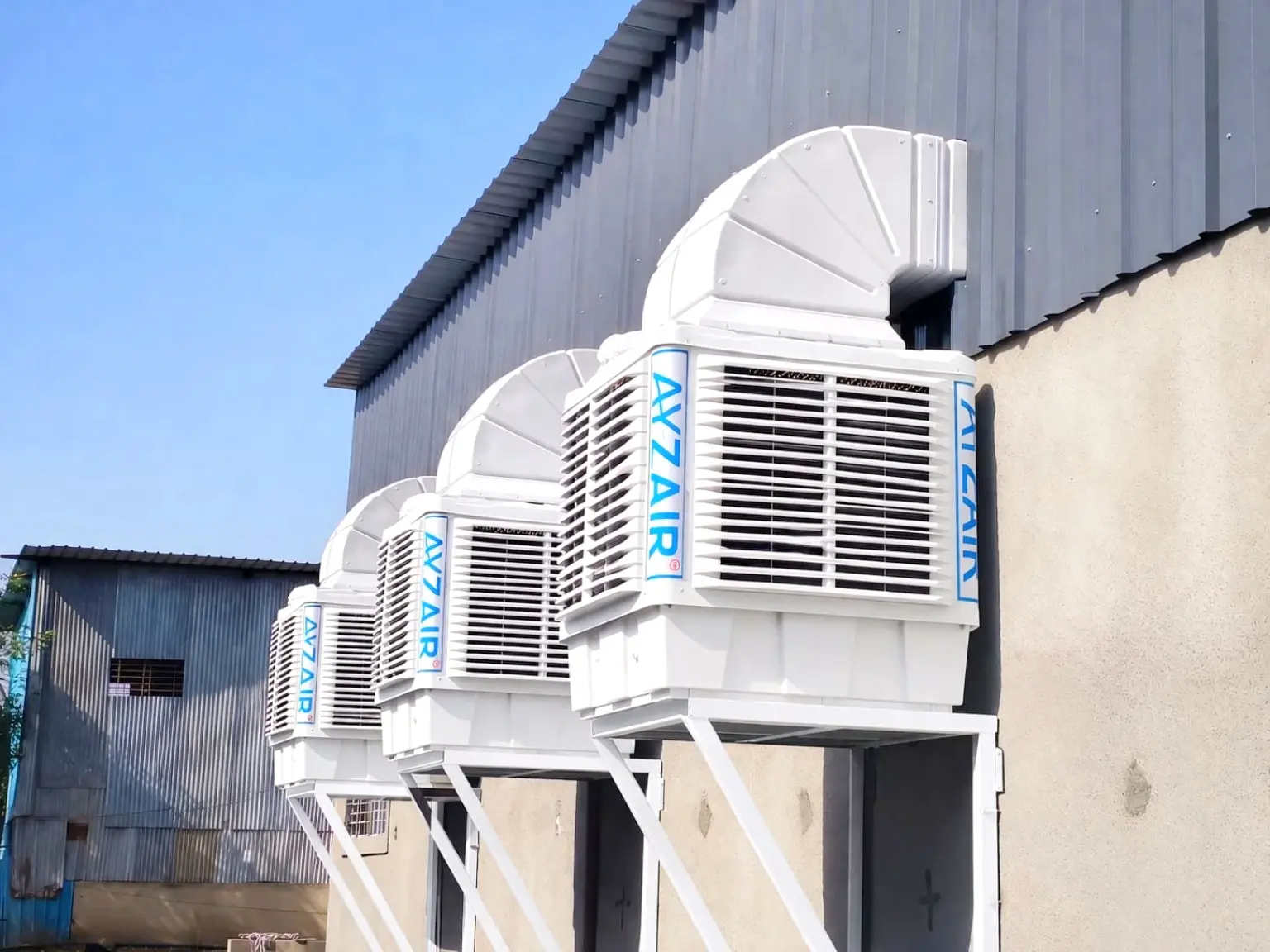
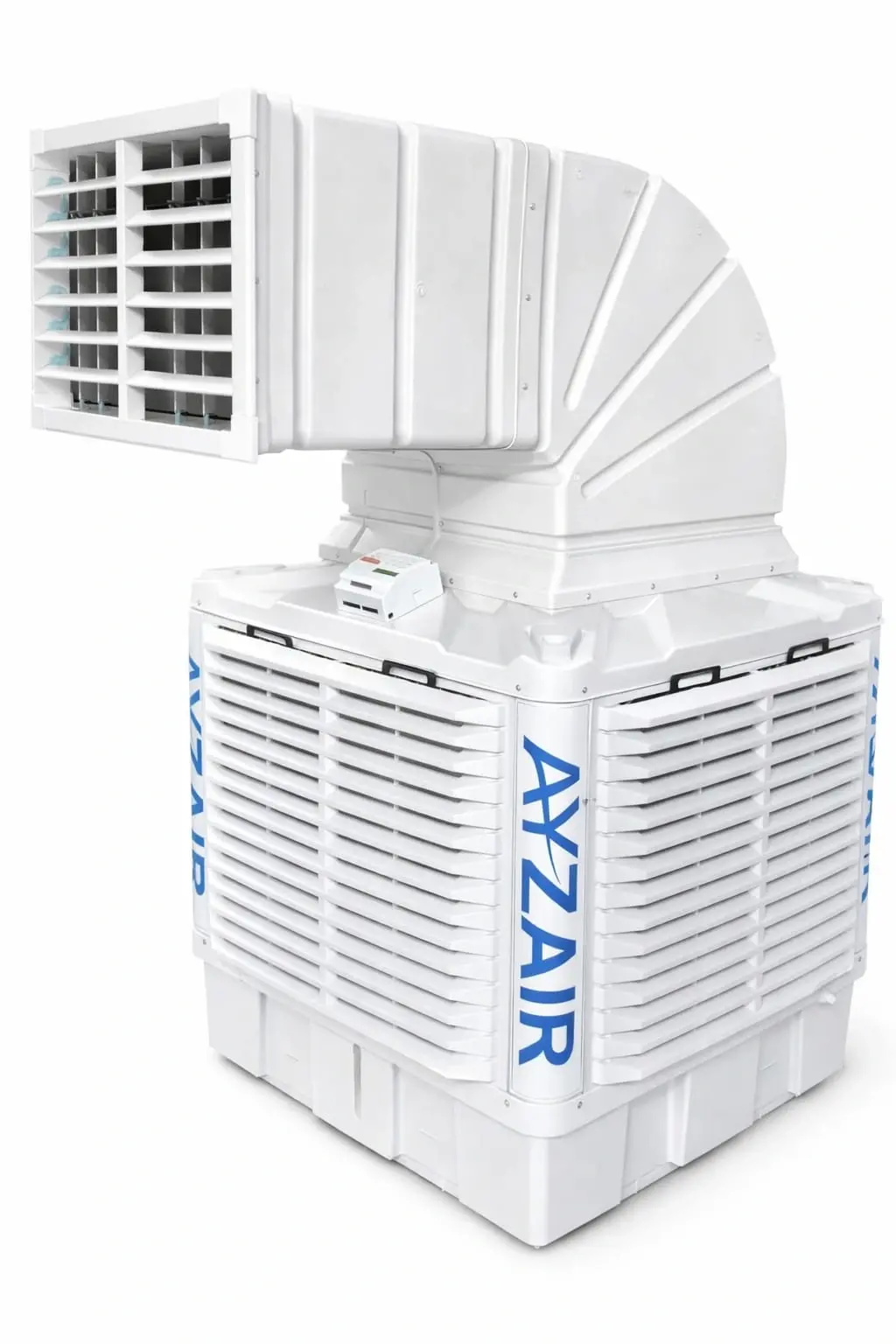
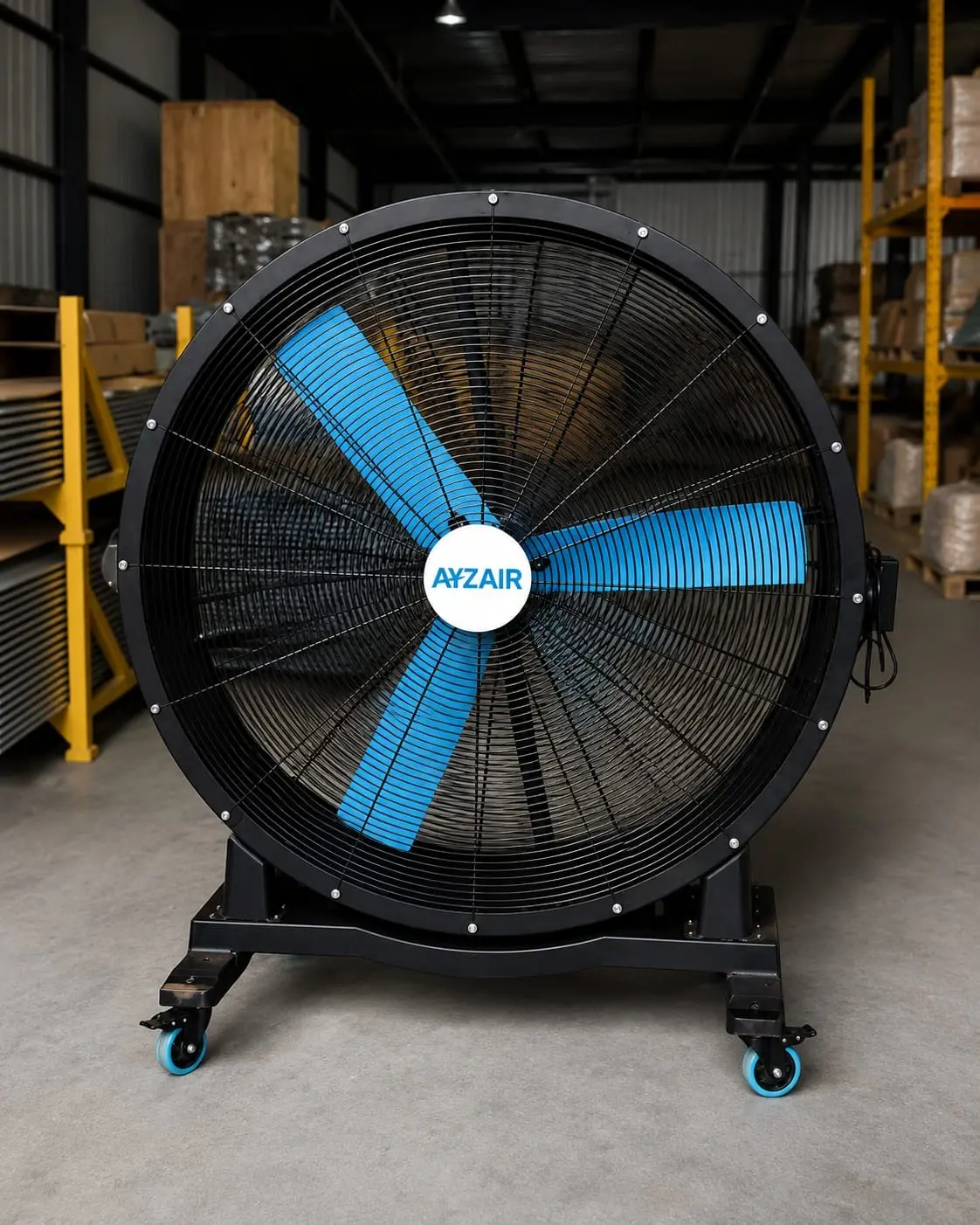
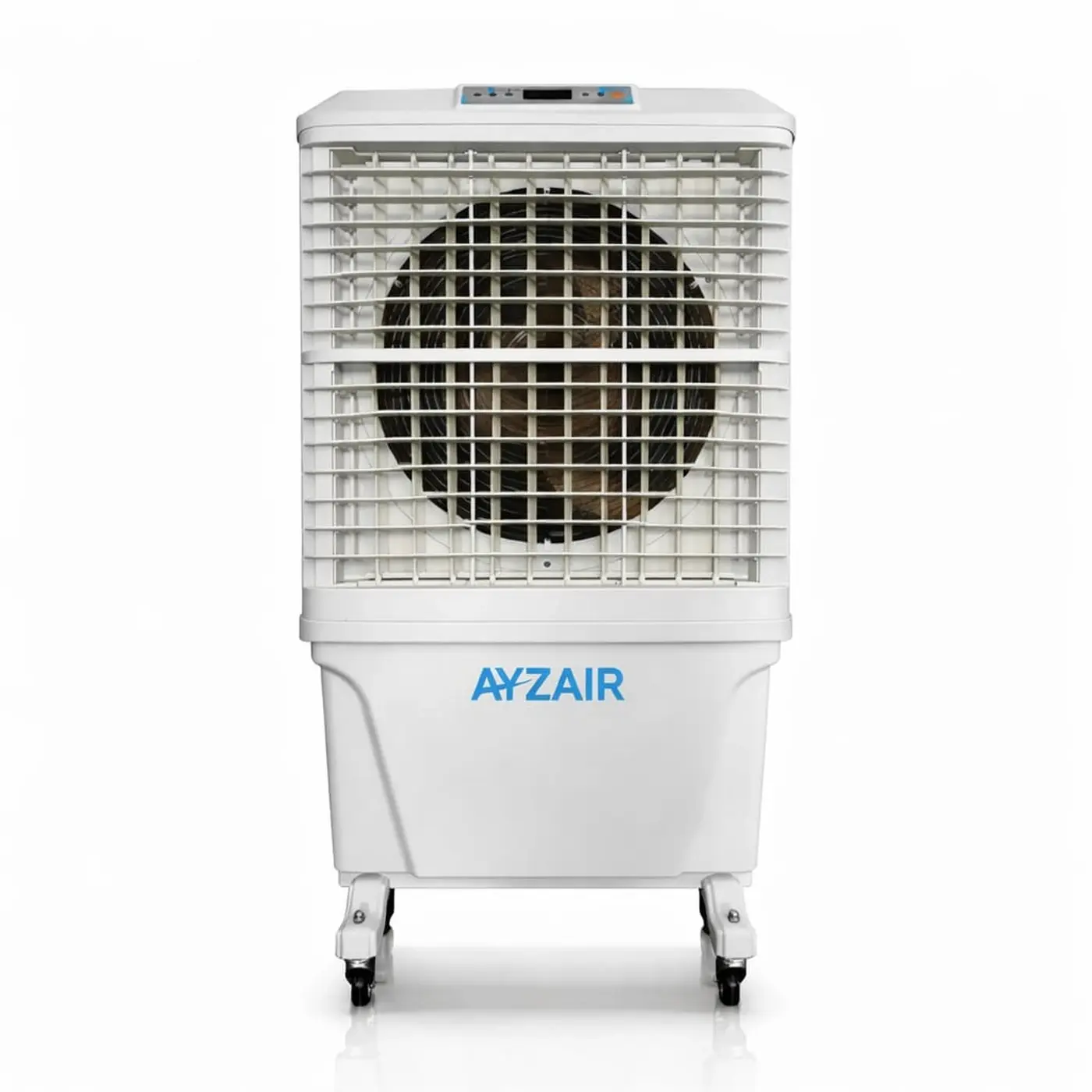
Ducted evaporative cooling delivered to those zones, with mobile fans covering intermittent areas, costs far less than trying to hold a uniform condition across a 6,000 m² envelope — and delivers better comfort where it is felt.
7. Stage your fans instead of running everything flat out
A bank of six exhaust fans running continuously at full speed is the default in too many installations. Staging fans against a thermostat or timer — two in the morning, four by midday, six only at peak — tracks the actual heat load.
VFD-controlled HVLS fans do the same job on the air-movement side: fan power scales roughly with the cube of speed, so dropping from 100% to 80% speed cuts power by nearly half while the perceived difference is small.
Want these numbers run for your building?
Send your current setup — fan count, cooling equipment, floor area and roof height. We will estimate what a layered Ayzair configuration would save you annually.
Request an energy assessment