For a 20,000 sq ft shed in Pune, the difference between evaporative cooling and air conditioning is not marginal — it is roughly 25 kW against 250 kW of connected load. That single number decides most industrial cooling projects in India before anyone discusses comfort.
But cheaper is not automatically correct. Evaporative cooling has a genuine physical limit, and there are buildings where it is the wrong answer. This guide covers both sides honestly so you can size the decision yourself.
How each system actually works
An air conditioner is a closed refrigeration loop. It recirculates the same indoor air across a cold evaporator coil, removes both heat and moisture, and dumps that heat outside through a compressor and condenser. Because the loop is closed, the building must be sealed for it to work.
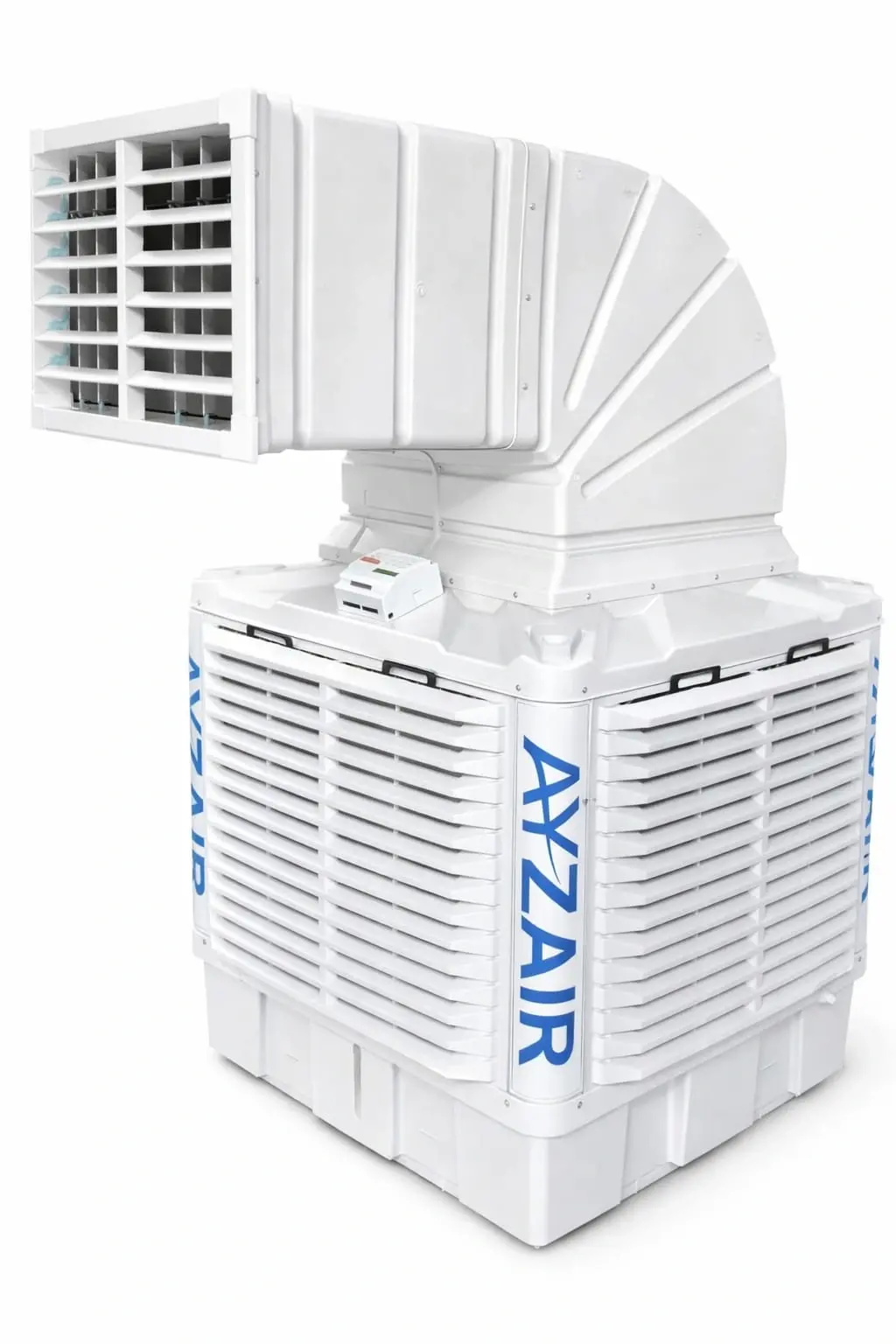
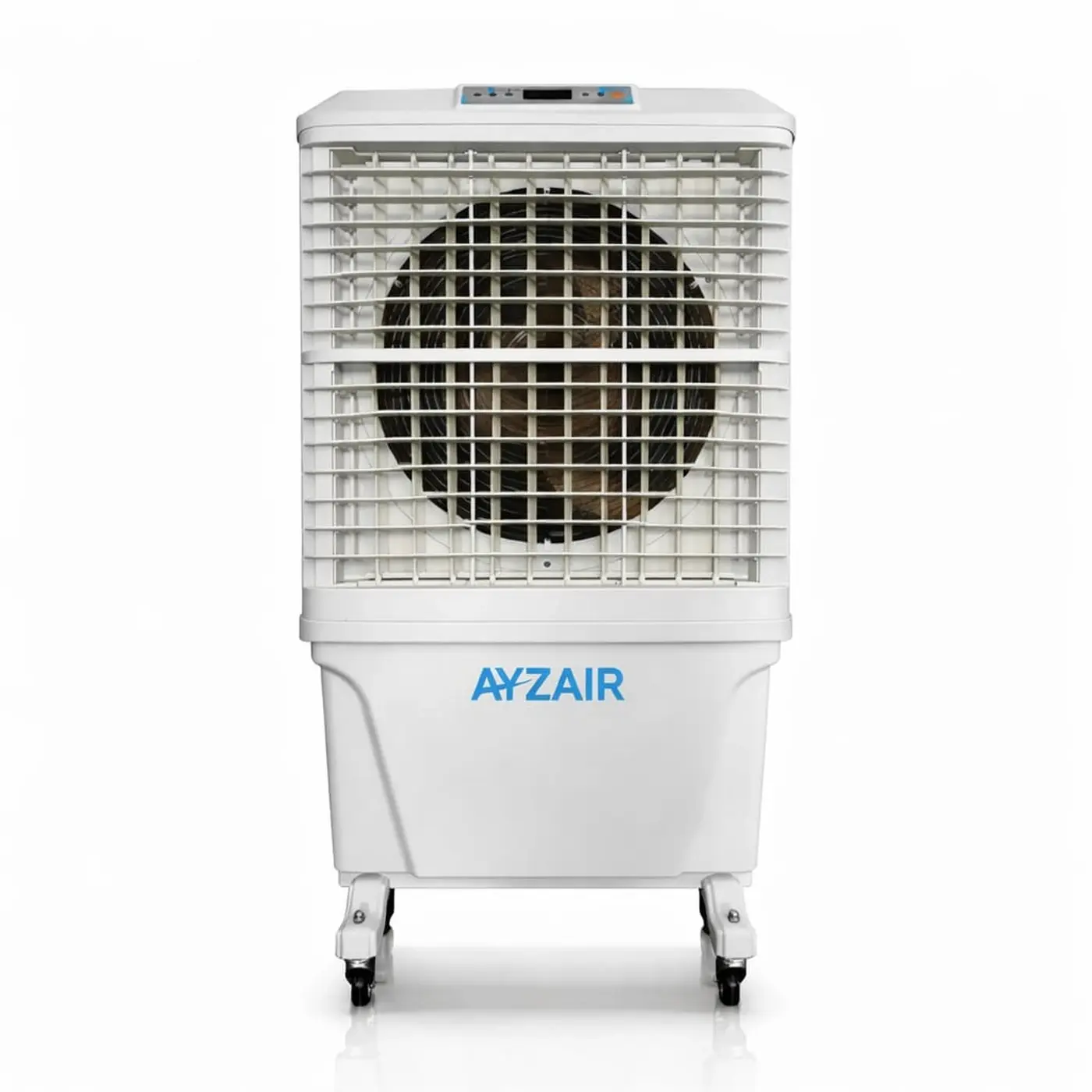
An evaporative cooler has no compressor and no refrigerant. It pulls 100% outside air through a water-saturated honeycomb pad. As water evaporates it absorbs sensible heat from the airstream — the air comes out cooler and more humid, and is then pushed into the building. The building must be open, or at least have deliberate exhaust paths, for it to work.
That single structural difference — sealed versus open, recirculated versus fresh — drives every other trade-off below.
Running cost: the number that decides most projects
A 22,000 CMH evaporative cooler draws about 2 kW. Delivering comparable air movement and cooling to the same floor area with packaged air conditioning would typically need 15–20 TR, which is in the region of 18–22 kW of connected load.
Over a 10-hour shift, 250 working days a year, at ₹8 per unit, that is roughly ₹40,000 a year against ₹4,00,000. Capital cost follows a similar ratio, and evaporative units need no refrigerant top-ups, no compressor rebuilds and no annual AMC of any significance.
| Factor | Evaporative cooler | Air conditioning |
|---|---|---|
| Connected load (per ~125 m²) | ~2 kW | ~18–22 kW |
| Temperature drop | 6–12 °C below ambient | Set point, typically 24 °C |
| Air source | 100% fresh outside air | Recirculated indoor air |
| Humidity effect | Adds moisture | Removes moisture |
| Building requirement | Open / exhausted | Sealed |
| Refrigerant | None | Required |
| Maintenance | Pad, pump, filter | Compressor, coils, gas, AMC |
| Suits shutter doors open | Yes | No |
← Swipe the table sideways to see all columns
The humidity limit — where evaporative cooling stops working
Evaporative cooling depends on the wet-bulb depression: the gap between dry-bulb temperature and wet-bulb temperature. The drier the air, the bigger the possible drop.
At 42 °C and 20% relative humidity — a typical Pune, Nashik, Ahmedabad or Jaipur May afternoon — you can expect 10–12 °C of drop. At 34 °C and 75% relative humidity, coastal Mumbai in August, the achievable drop collapses to 2–3 °C, and adding moisture to already-humid air can make the space feel worse.
The practical rule: evaporative cooling is excellent for the hot dry months across most of inland India, useful as high-volume fresh-air ventilation during the monsoon, and not a substitute for dehumidification in a coastal humid climate that needs a fixed set point year-round.
Where air conditioning is genuinely the right call
- Process areas with a hard temperature and humidity specification — pharmaceutical clean rooms, electronics assembly, precision metrology labs.
- Sealed spaces you can realistically keep sealed: offices, control rooms, server rooms.
- Coastal high-humidity locations where the wet-bulb depression is small for most of the year.
- Any application where added moisture would damage the product — certain powders, hygroscopic materials, paper storage.
Where evaporative cooling wins outright
- Large-volume sheds with high roofs and shutter doors that open through the shift.
- Spaces where fresh air is a requirement, not a nice-to-have — welding bays, foundries, kitchens, poultry housing.
- Buildings where the electrical infrastructure simply cannot support an AC-sized load without a transformer upgrade.
- Seasonal or peaky loads: event halls, marriage lawns, exhibition spaces.
- Any project where payback period, not absolute set point, is the deciding metric.
The hybrid answer most factories land on
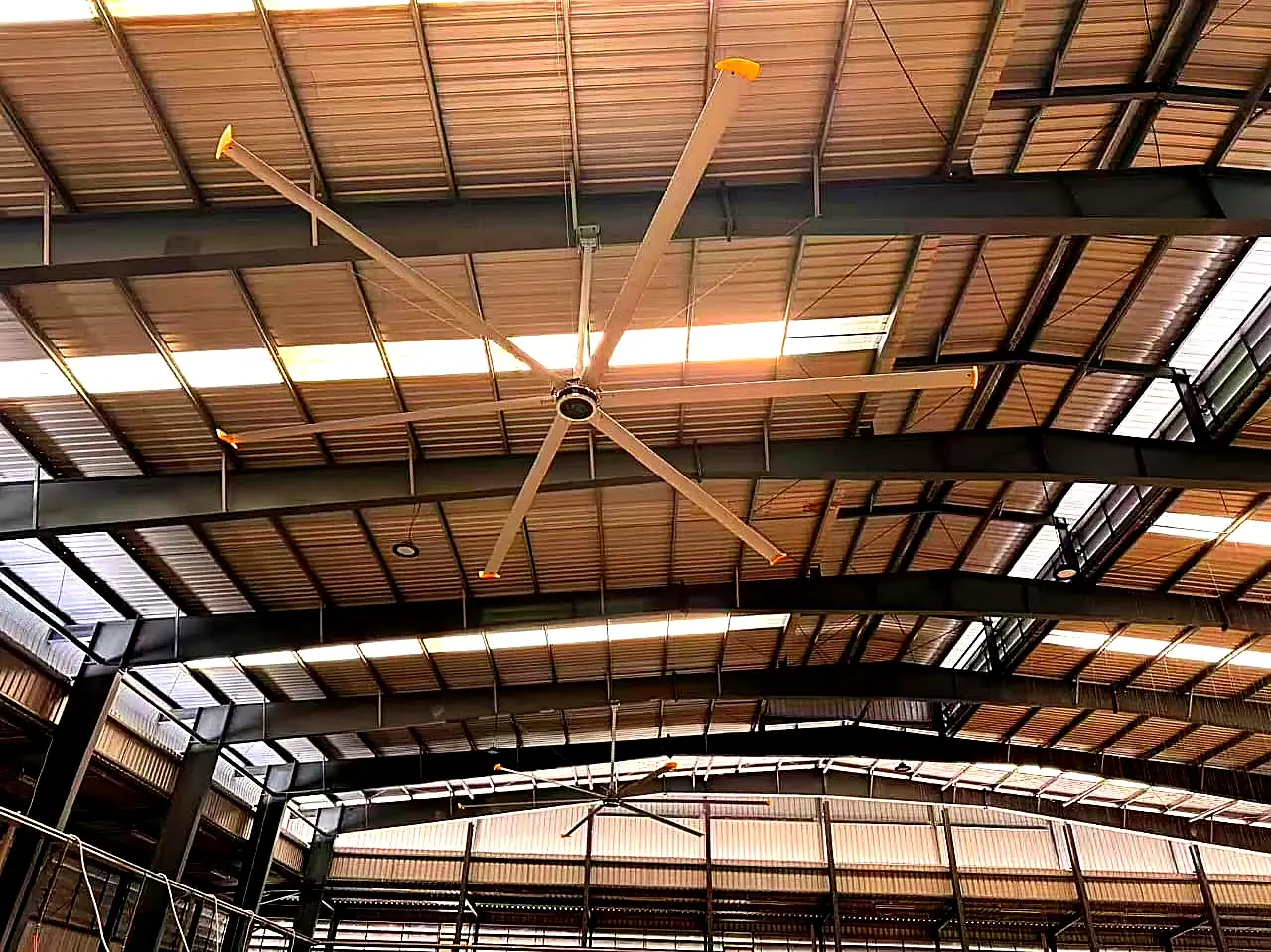
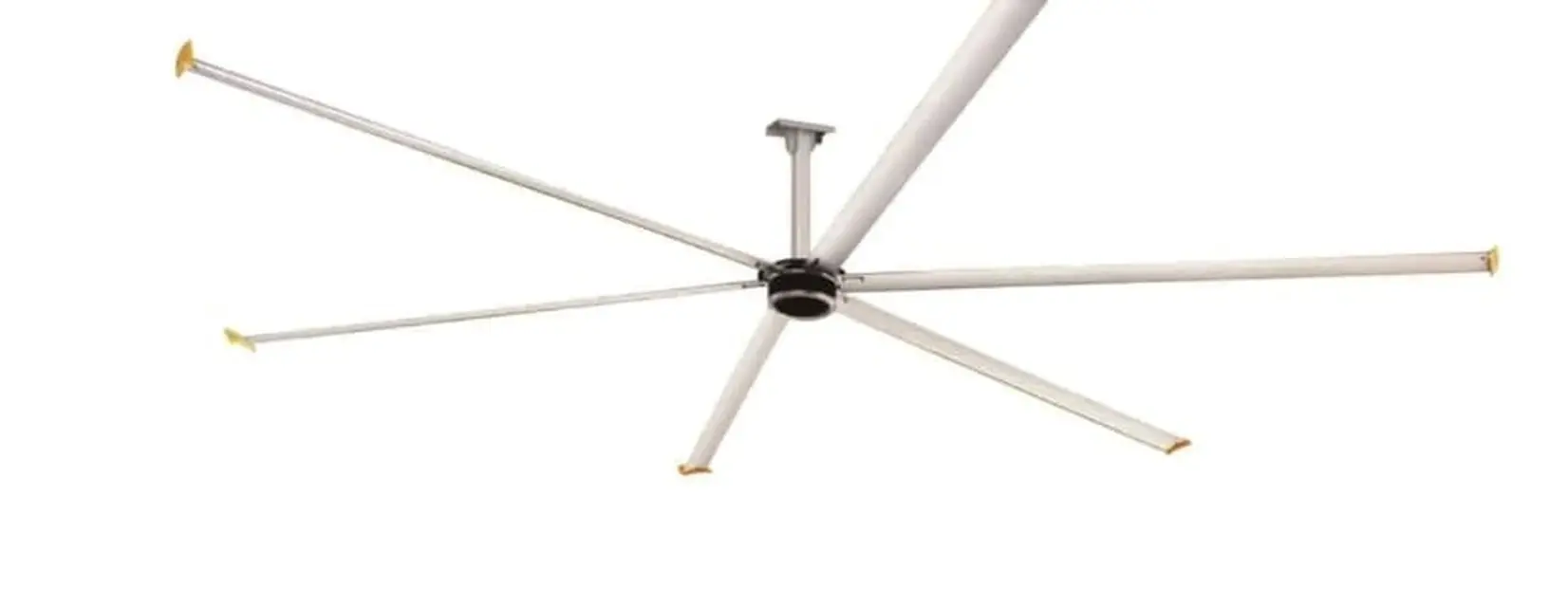
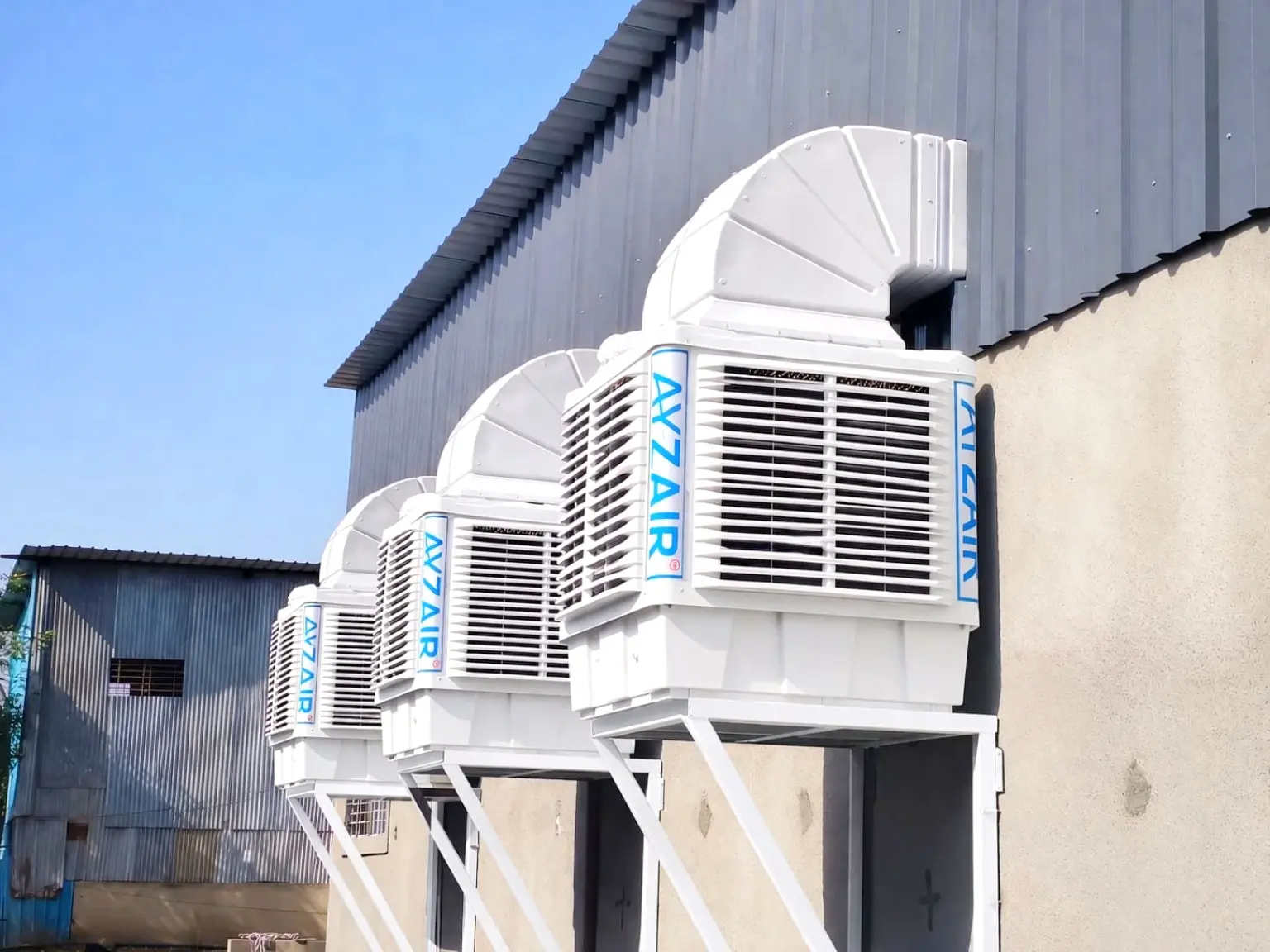
In practice the strongest configuration is rarely one or the other. Ductable evaporative coolers deliver cooled fresh air into the working zone; HVLS ceiling fans layered over them add a further 5–8 °C of perceived cooling through air movement across the skin; and air conditioning is reserved for the small sealed rooms — QC lab, office, server room — where it genuinely earns its running cost.
This gets you comfortable shop-floor conditions at a fraction of the energy bill, while still meeting the hard specification in the areas that have one.
Not sure which side your building falls on?
Send us your floor area, roof height and what happens inside the building. Our engineering team will tell you honestly whether evaporative cooling is the right fit — and size it if it is.
Get a free sizing assessment